
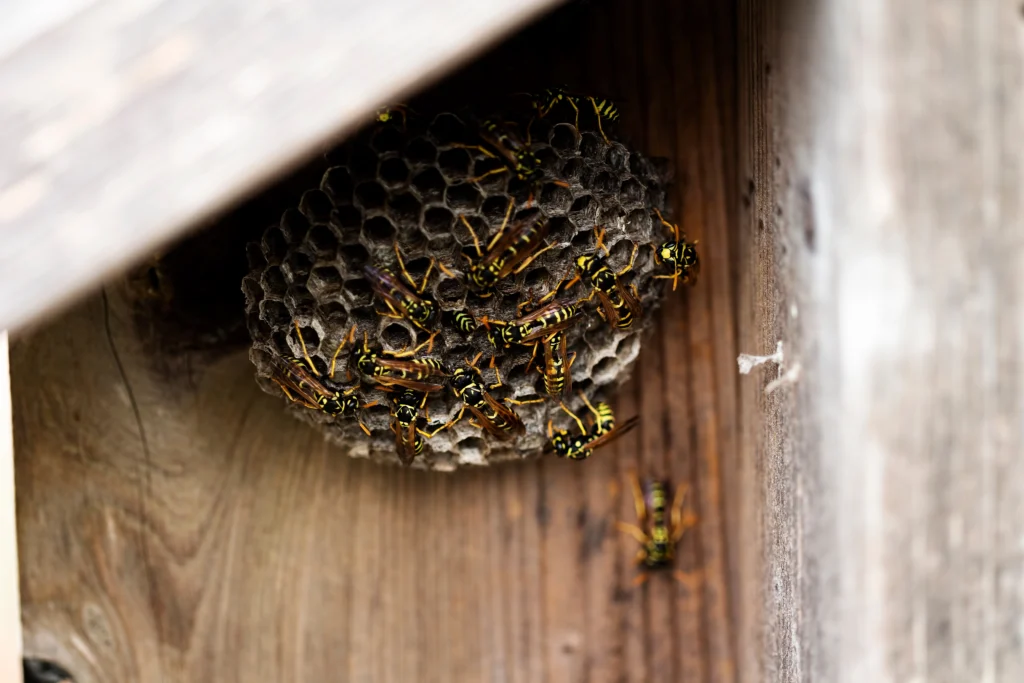
If you’ve noticed more painful encounters with wasps, hornets, and yellow jackets during the summer months in Edwardsville, IL, you’re not imagining it. These stinging insects become noticeably more aggressive as temperatures rise, outdoor activity increases, and their colonies reach peak size. Understanding why summer brings out their worst behavior can help homeowners take steps to reduce the risk of stings around their property.
Summer Is Peak Colony Season
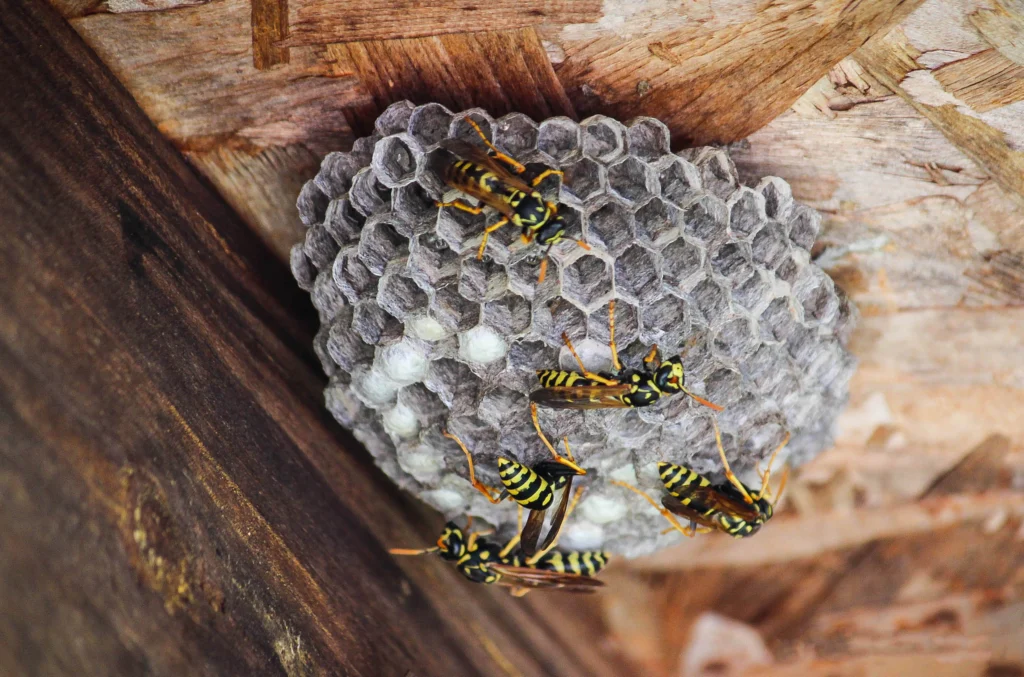
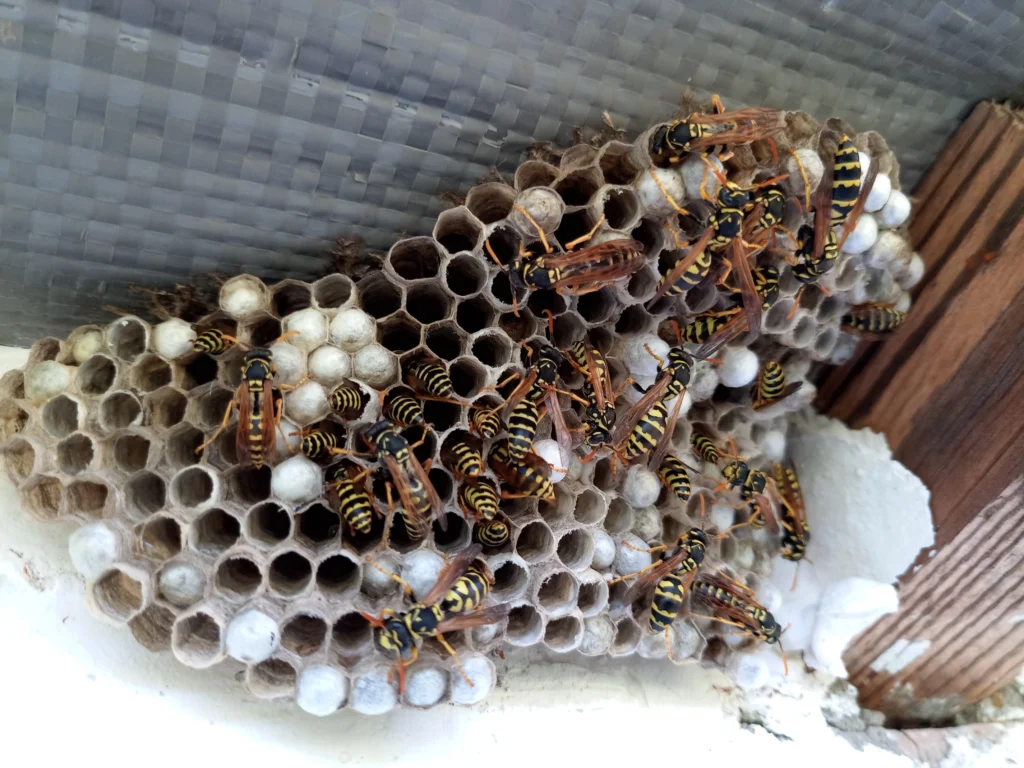
By mid to late summer, wasp, hornet, and yellow jacket colonies are at their largest. A nest that started with just a queen in early spring can grow into hundreds or even thousands of workers by July and August. With more insects actively defending the nest, the chances of aggressive behavior rise sharply. Any perceived threat—lawn mowing, kids playing nearby, or even vibrations from foot traffic—can trigger a defensive swarm. In Edwardsville neighborhoods, nests are commonly found under eaves, inside wall voids, sheds, decks, trees, and underground. The closer these nests are to daily human activity, the more frequent the encounters become.
Heat Increases Irritability and Activity
High summer temperatures play a major role in aggressive behavior. Heat speeds up insect metabolism, making wasps and hornets more active and reactive. During hot days, they forage more frequently for food and water, which increases the likelihood of crossing paths with people. Extended heat waves common in southern Illinois can also stress colonies, making them quicker to defend resources and territory. This heightened activity explains why stings often happen during routine yard work or outdoor gatherings.
Yellow Jackets Become Highly Territorial
Yellow jackets are especially aggressive compared to other stinging insects. Unlike many wasps that stay near their nests, yellow jackets actively patrol large areas around them. Ground nests are particularly dangerous because people may unknowingly walk or mow over them, triggering an immediate attack. Late summer is when yellow jackets shift their focus from protein-based food sources to sugary items. Open soda cans, outdoor trash bins, fallen fruit, and picnic food become powerful attractants. This is why yellow jackets are frequently seen hovering around patios, pools, and outdoor events in Edwardsville during August and early September.
Dwindling Food Sources Cause Competition
As summer progresses, natural food sources become harder to find. Flowers fade, insect prey declines, and competition between colonies increases. Wasps and hornets become more desperate and aggressive while searching for food, often scavenging near homes and businesses. This scavenging behavior brings them closer to people, increasing the risk of defensive stings—especially if someone accidentally swats at them or gets too close to a food source they’re guarding.
Stings Are a Defensive Reaction, Not Random Attacks
Despite their reputation, these insects don’t sting without reason. Aggression is almost always tied to nest defense or food competition. Sudden movements, loud noises, or attempts to knock down a nest can escalate the situation instantly. Once one insect releases alarm pheromones, others nearby respond within seconds, leading to multiple stings. Because nests are often hidden, homeowners may not realize there’s a problem until someone is already stung.
Why Professional Control Matters in Summer
Attempting to remove or spray nests during peak summer months is extremely risky. Store-bought sprays often fail to eliminate the entire colony and can provoke a mass attack. Professional pest control focuses on identifying nest locations, understanding insect behavior, and safely eliminating colonies while minimizing risk to people and pets.
In Edwardsville, IL, proactive summer pest control helps reduce nest activity before colonies become too large and aggressive, protecting your home, yard, and family throughout the most dangerous season for stinging insects. Give Brady Pest Solutions a call today for summer pest control.